
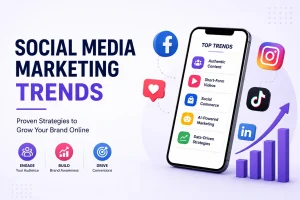
 Social Media Trends: The Complete Guide to What’s Shaping Social Media Marketing
Social media is changing faster than ever. New platforms, content formats, algorithms, creator trends, and audience behaviors are constantly influencing how brands communicate online. For businesses and digital marketers, keeping up with the latest social media trends is essential for staying visible, engaging audiences, and building a strong online presence.
From short-form videos and AI-powered content creation to influencer marketing and social commerce, today’s social media landscape offers many opportunities. However, simply following every trend is not enough. Successful brands understand which trends are relevant to their audience and use them strategically.
In this guide, we’ll explore the most important social media trends, why they matter, and how businesses can use them effectively.
What Are Social Media Trends?
Social media trends are popular patterns, behaviors, technologies, content formats, or strategies that become widely adopted across social media platforms.
These trends can include:
-
Popular content formats
-
Changes in user behavior
-
New social media features
-
Viral challenges and topics
-
Influencer marketing strategies
-
AI-powered tools
-
Social commerce
-
Video marketing
-
Community-building strategies
-
Changes in platform algorithms
Social media trends can change quickly. A content format that performs extremely well today may become less effective as audience preferences evolve. This is why marketers need to monitor trends regularly and adapt their strategies.
Why Are Social Media Trends Important for Businesses?
Following relevant social media trends can help businesses improve their digital marketing performance.
1. Increase Brand Visibility
Trending content can receive greater attention and engagement. When businesses create content around relevant trends, they have an opportunity to reach people beyond their existing followers.
For example, a business using a popular video format can potentially reach new audiences through recommendations and platform discovery features.
2. Improve Audience Engagement
People are more likely to interact with content that feels current and relevant. Trends can provide businesses with creative ways to encourage comments, shares, saves, likes, and other interactions.
3. Stay Competitive
Social media is highly competitive. If competitors are experimenting with new formats while a business continues using the same strategy without testing anything new, the business may struggle to maintain attention.
4. Understand Audience Behavior
Monitoring trends helps marketers understand what audiences currently enjoy, discuss, and share. These insights can be useful when developing future content strategies.
5. Support Business Growth
Social media trends can contribute to broader marketing goals such as website traffic, lead generation, brand awareness, customer relationships, and sales.
10 Important Social Media Trends to Watch
1. Short-Form Video Continues to Dominate
Short-form video remains one of the most important content formats in social media marketing.
Platforms such as Instagram, YouTube, and TikTok have made short videos a major part of everyday social media consumption. Businesses can use short-form videos to educate audiences, demonstrate products, answer questions, share tips, or showcase behind-the-scenes content.
Examples include
-
Quick tutorials
-
Product demonstrations
-
Before-and-after content
-
Educational tips
-
Frequently asked questions
-
Behind-the-scenes videos
-
Customer experiences
-
Industry insights
The key is not simply making videos short. The content should provide value quickly and capture attention from the beginning.
2. Authentic Content Is Becoming More Valuable
Highly polished advertising content isn’t the only way to attract an audience.
Many users prefer content that feels natural, relatable, and genuine. This has increased the importance of authentic social media communication.
Businesses can show:
-
Behind-the-scenes activities
-
Team introductions
-
Work processes
-
Customer stories
-
Everyday business moments
-
Mistakes and lessons
-
Personal insights from founders or employees
Authenticity can make a brand feel more human and help develop stronger relationships with its audience.
3. Artificial Intelligence Is Changing Social Media Marketing
Artificial intelligence has become an important tool for digital marketers.
AI can assist with tasks such as:
-
Brainstorming content ideas
-
Writing initial content drafts
-
Creating captions
-
Generating content calendars
-
Analyzing data
-
Researching topics
-
Creating images and videos
-
Identifying audience patterns
However, AI should support creativity rather than completely replace human input.
A strong social media strategy combines AI efficiency with human creativity, brand knowledge, originality, and audience understanding.
4. Social Search Is Growing
People increasingly use social media platforms to discover information, products, businesses, restaurants, creators, and recommendations.
Instead of relying only on traditional search engines, users may search directly within platforms such as Instagram, TikTok, YouTube, and Pinterest.
This makes social SEO increasingly important.
Businesses should consider using relevant keywords in:
-
Captions
-
Video titles
-
Profiles
-
Descriptions
-
Hashtags
-
On-screen text
-
Alt text where available
For example, a digital marketing agency targeting customers in Kerala might naturally use phrases such as “digital marketing services in Kerala” within relevant content rather than relying only on generic hashtags.
5. Influencer Marketing Is Becoming More Strategic
Influencer marketing has evolved beyond simply paying a celebrity to promote a product.
Brands are increasingly interested in creators whose audiences closely match their target customers.
Micro-influencers and niche creators can be particularly useful because they often have focused communities and strong relationships with their followers.
Businesses can collaborate with creators for:
-
Product reviews
-
Tutorials
-
Demonstrations
-
Brand awareness campaigns
-
Educational content
-
User-generated content
-
Event promotions
The most effective partnerships usually focus on audience relevance and credibility rather than follower count alone.
6. User-Generated Content Builds Trust
User-generated content (UGC) is content created by customers or users rather than directly by the brand.
Examples include
-
Customer reviews
-
Testimonials
-
Product photos
-
Customer videos
-
Unboxing videos
-
Social media mentions
-
Customer experiences
UGC can make a brand feel more trustworthy because potential customers can see real experiences from other people.
Businesses can encourage UGC by creating campaigns, asking customers to share experiences, or featuring customer content with permission.
7. Social Commerce Is Changing Online Shopping
Social media is increasingly becoming part of the customer journey.
Instead of discovering a product on social media and leaving the platform immediately, users may be able to explore products, interact with brands, and move toward purchasing through social platforms.
Social commerce strategies can include:
-
Product showcases
-
Shoppable content
-
Product demonstrations
-
Creator collaborations
-
Live shopping
-
Customer reviews
For e-commerce businesses, social media can therefore function as more than a branding channel—it can become part of the sales funnel.
8. Communities Are More Important Than Just Followers
Having thousands of followers does not automatically mean having a strong social media presence.
A smaller but highly engaged community can be extremely valuable.
Businesses can focus on building communities through:
-
Meaningful conversations
-
Polls
-
Q&A sessions
-
Live streams
-
Private groups
-
Educational content
-
Customer discussions
-
Regular responses to comments
The goal is to move from simply collecting followers to developing relationships with people who genuinely care about the brand.
9. Interactive Content Drives Engagement
People don’t always want to passively consume content. Interactive formats give them an opportunity to participate.
Examples include
-
Polls
-
Quizzes
-
Question stickers
-
“This or That” posts
-
Surveys
-
Contests
-
Interactive stories
-
Q&A sessions
Interactive content can also provide useful information about audience preferences.
For example, a fashion brand could ask followers to choose between two styles. The responses can provide insights while simultaneously encouraging engagement.
10. Social Media Analytics Are Becoming Essential
Creating content without measuring results makes it difficult to understand what works.
Social media analytics can help marketers evaluate performance using metrics such as:
-
Reach
-
Impressions
-
Engagement rate
-
Video views
-
Watch time
-
Follower growth
-
Website clicks
-
Leads
-
Conversions
Instead of focusing only on likes, marketers should connect social media metrics to their actual business objectives.
For example, if the goal is lead generation, the number of qualified leads may be more important than the number of likes.
How to Use Social Media Trends Effectively
Following every trend isn’t a good strategy. The goal is to identify trends that match your audience and business objectives.
Step 1: Understand Your Audience
Before using a trend, understand:
-
Who is your target audience?
-
Which platforms do they use?
-
What content do they consume?
-
What problems do they have?
-
What type of content do they engage with?
Step 2: Choose the Right Platform
Different platforms have different audiences and content behaviors.
A strategy that works on Instagram may not work exactly the same way on LinkedIn or YouTube.
Choose platforms based on your audience rather than trying to be everywhere.
Step 3: Monitor Trends Regularly
Keep an eye on:
-
Trending content formats
-
New platform features
-
Popular topics
-
Creator strategies
-
Competitor content
-
Audience conversations
Trend monitoring should become a regular part of your marketing process.
Step 4: Adapt Trends to Your Brand
Don’t copy a trend exactly.
Instead, ask:
“How can I use this trend in a way that makes sense for my brand?”
For example, a digital marketing agency could take a popular video format and turn it into a quick educational marketing tip.
Step 5: Measure Performance
After publishing trend-based content, analyze the results.
Compare it with your regular content and determine whether it helped achieve your objective.
Common Social Media Marketing Mistakes
Even when businesses understand social media trends, they can make mistakes.
Following Every Trend
Not every trend is relevant to every brand. Using unrelated trends can make content feel forced.
Focusing Only on Virality
Going viral is not always the same as achieving a business goal. A viral post may generate views without generating meaningful leads or customers.
Ignoring the Audience
Content should be created for the audience, not simply because a trend is popular.
Posting Without a Strategy
Random posting can make it difficult to build a consistent brand identity.
Ignoring Analytics
Without analyzing performance, marketers may continue investing time in content that isn’t producing meaningful results.
How Small Businesses Can Benefit From Social Media Trends
Small businesses don’t necessarily need large advertising budgets to participate in social media trends.
They can start with simple strategies such as
-
Creating educational short videos.
-
Answering common customer questions.
-
Sharing customer experiences.
-
Using relevant keywords.
-
Experimenting with different content formats.
-
Collaborating with relevant local creators.
-
Responding to comments and messages.
-
Monitoring analytics.
-
Showing behind-the-scenes content.
-
Building a consistent posting schedule.
Consistency and relevance can be more useful than simply trying to create viral content every day.
The Future of Social Media Marketing
The future of social media marketing is likely to become increasingly personalized, video-focused, AI-assisted, and community-driven.
Brands will need to understand not only what people see but also why they engage with certain content.
AI will continue helping marketers with research, content production, personalization, and analytics. At the same time, human creativity and authentic communication will remain important.
Search behavior may also continue shifting toward social platforms, making social SEO an increasingly valuable part of digital marketing.
Most importantly, successful social media marketing will require continuous experimentation. What works for one brand may not work for another.
Final Thoughts
Understanding social media trends is an important part of modern digital marketing. From short-form video and artificial intelligence to social SEO, influencer marketing, user-generated content, and online communities, social media continues to evolve.
However, trends should be treated as opportunities—not rules.
The most effective approach is to understand your audience, choose the right platforms, create valuable content, experiment with relevant trends, and measure the results.
Whether you are a small business owner, content creator, startup, or digital marketer, staying aware of social media trends can help you adapt to changing audience behavior and build a stronger online presence.
The goal isn’t to follow every trend. It’s to find the trends that genuinely fit your audience, brand, and marketing objectives.